What Is an Enzyme? Biological Catalysts Explained
Right now, without you asking it to, your body is running thousands of different chemical reactions — digesting breakfast, copying DNA, turning glucose into energy. Left alone, most of those reactions would take years. Your cells run them in milliseconds, and the machines that make that possible are enzymes.
The short answer: an enzyme is a biological catalyst — a molecule, almost always a protein, that speeds up a specific chemical reaction in a living thing by lowering its activation energy, without being used up itself. One enzyme molecule can be reused thousands of times per second.
What an enzyme actually is
An enzyme is a large molecule — usually a globular protein, a chain of amino acids folded into a precise three-dimensional blob. Somewhere on that blob is a small pocket called the active site, shaped to fit one particular molecule (the substrate). The substrate binds, the reaction happens, the products leave, and the enzyme is ready to go again:
enzyme + substrate → enzyme–substrate complex → enzyme + products
Because the enzyme comes out unchanged, it satisfies the definition of a catalyst you already know from chemistry: it speeds up a reaction without being consumed. What makes enzymes special is how good they are at it. A typical enzyme accelerates its reaction by a factor of a million to a trillion (10⁶–10¹²). Carbonic anhydrase, which helps your blood carry CO₂, processes about a million CO₂ molecules every second — per enzyme molecule.
You can usually spot an enzyme by its name: most end in -ase (amylase, lactase, DNA polymerase), and the start of the name often tells you the substrate — lactase breaks down lactose.
How enzymes work: lowering the energy barrier
Every reaction has an activation energy — an energy hill the reactants must climb before they can turn into products. If the hill is high, almost no molecules make it over at body temperature, so the reaction crawls.
An enzyme doesn't push molecules over the hill. It provides an easier route with a lower hill. By holding the substrate in exactly the right position, straining the right bonds, and offering a helpful chemical microenvironment, the enzyme stabilizes the awkward halfway arrangement (the transition state) so that far less energy is needed to reach it. More molecules make it over per second, so the reaction runs faster — often spectacularly faster.
Two things an enzyme does not do:
- It does not change the position of equilibrium — it only gets you there sooner.
- It does not get consumed — the same molecule cycles again and again.
Why enzymes are so specific
An inorganic catalyst like platinum will happily speed up many different reactions. An enzyme usually catalyzes one reaction, for one substrate or one small family of substrates. Sucrase digests sucrose — not lactose, even though both are similar double sugars.
The reason is the active site. Its shape and its chemistry (which amino acids line the pocket, their charges, their ability to hydrogen-bond) match one substrate the way a lock matches a key. Change the substrate slightly and it no longer fits or no longer binds. This specificity is what lets a cell run thousands of different reactions in the same tiny bag of fluid without chaos: each reaction has its own dedicated machine.
Enzymes you already know
| Enzyme | Where | What it does |
|---|---|---|
| Amylase | Saliva, small intestine | Starts breaking starch into sugars — why bread turns sweet if you chew it long enough |
| Pepsin | Stomach | Chops proteins into smaller pieces; thrives in stomach acid at pH ~2 |
| Catalase | Most cells | Destroys toxic H₂O₂ (2H₂O₂ → 2H₂O + O₂) — the fizz when peroxide meets a cut |
| Lactase | Small intestine | Digests lactose; low levels cause lactose intolerance |
| DNA polymerase | Nucleus | Builds new DNA strands during replication |
Each works best under particular conditions — most human enzymes are happiest around 37 °C and near-neutral pH, though pepsin's optimum is famously acidic. Push the temperature or pH too far and the protein unfolds and stops working (that's denaturation — a story for later this week).
Common mistakes to avoid
- Saying enzymes make reactions happen that otherwise wouldn't. The reaction was always possible — just absurdly slow. Enzymes change the rate, not the destination, and never shift the equilibrium.
- Saying enzymes are used up. They're catalysts. One molecule is recycled thousands or millions of times. (Enzymes do eventually wear out and get replaced, but not as part of the reaction they catalyze.)
- Assuming every enzyme is a protein. Almost all are, but a few are RNA — called ribozymes. The most famous is the ribosome's catalytic core, which builds your proteins. Worth one sentence in an exam answer.
FAQ
What is an enzyme in simple terms?
A molecule (nearly always a protein) that acts as a biological catalyst: it speeds up one specific chemical reaction in a living organism without being used up.
What do enzymes actually do?
They lower the activation energy of a reaction by binding the reactant at their active site and stabilizing the transition state, so the reaction happens much faster at body temperature.
Are all enzymes proteins?
Nearly all, but not every one — some RNA molecules, called ribozymes, also catalyze reactions. The ribosome, which joins amino acids into proteins, is the classic example.
Why do enzyme names end in -ase?
It's the standard naming convention: the suffix -ase is attached to the substrate or the reaction type — lactase acts on lactose, DNA polymerase builds DNA polymers. A few old names like pepsin and trypsin predate the rule.
The takeaway
An enzyme is a biological catalyst — usually a folded protein with a precisely shaped active site — that speeds up one specific reaction by lowering its activation energy, and comes out unchanged, ready to run again. Specific, reusable, and astonishingly fast: that's the whole job description.
Enzymes are catalysts, so start with What Is a Catalyst? How Reactions Get a Shortcut and What Is Activation Energy? The Barrier Every Reaction Must Clear. Meet a real one in What Is Pepsin?, then go deeper with [Enzyme vs Catalyst] and [What Is an Active Site?].
You just learned one topic the five-minute way. The series does it for your entire course — one printable page per topic: understand it, memorize it, test yourself. Five minutes. Next topic.
- Vol 1 · Semester 1 — atoms, moles, stoichiometry, bonding & gases (22 sheets)
- Vol 2 · Semester 2 — kinetics, equilibrium, acids & bases, electrochem (19 sheets)
- Vol 3 · The Hard Stuff — cram charts & decision trees for the units worth the most points (15 sheets)
Built for advanced-level high school and first-year college chem. 56 sheets, printable, Letter + A4.
See what's inside →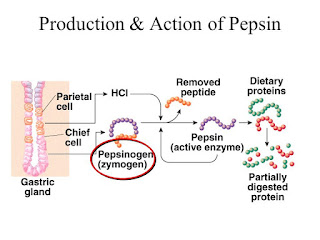

Comments
Post a Comment