What Is a Cofactor? Coenzymes and Vitamins Explained
Why do vitamin deficiencies make you ill? Not because vitamins are fuel — you'd starve on them — but because many enzymes are built incomplete on purpose, and vitamins supply the missing part. No missing part, no working enzyme, no reaction.
The short answer: a cofactor is a non-protein helper that some enzymes require to work — either a metal ion (like Zn²⁺, Mg²⁺, or Fe²⁺) or a small organic molecule called a coenzyme (like NAD⁺, many of which are made from B vitamins). Enzyme protein alone = apoenzyme, inactive; protein + cofactor = holoenzyme, active.
Why enzymes need help
An enzyme is a protein, and proteins are built from just 20 amino acids. Those side chains are good at shape-making, gripping, and proton shuffling — but they're limited chemists. None of them is great at, say, carrying electrons, holding a specific positive charge, or ferrying chemical fragments between molecules.
So many enzymes recruit outside talent. The protein does the recognizing (the active site, the specificity), and a bolted-in cofactor provides the missing chemical skill. Remember the name logic:
apoenzyme (protein only, off) + cofactor = holoenzyme (complete, on)
Plenty of enzymes need no cofactor at all — pepsin digests protein perfectly well as pure protein. But a huge fraction of metabolism runs on cofactor-assisted enzymes.
Type 1: metal ion cofactors
Simple inorganic ions, usually held in place by charged or electron-rich side chains:
| Metal ion | Example enzyme | What the ion does |
|---|---|---|
| Zn²⁺ | Carbonic anhydrase | Grips and activates a water molecule for attack on CO₂ |
| Mg²⁺ | Enzymes using ATP (e.g. hexokinase); DNA polymerase | Clamps ATP's negatively charged phosphates into position |
| Fe²⁺/Fe³⁺ | Catalase (in its heme group) | Handles the electrons while H₂O₂ is destroyed |
| Cu²⁺ | Cytochrome c oxidase | Passes electrons along the respiratory chain |
This is why trace minerals — zinc, iron, copper, manganese — appear on nutrition labels despite being needed in tiny amounts: they're enzyme parts, not fuel. (Charged helpers like these are just ions doing a day job — cation chemistry straight from the atoms unit.)
Type 2: coenzymes (and the vitamin connection)
Coenzymes are small organic molecules that partner with enzymes, and many act as carriers: they pick up something in one reaction — electrons, hydrogen, or a chemical fragment — and deliver it in another. Because they leave the enzyme to make the delivery and come back for more, a coenzyme behaves almost like a second substrate that gets recycled.
The star example is NAD⁺ (nicotinamide adenine dinucleotide). During the breakdown of glucose, NAD⁺ collects electrons (becoming NADH) and couriers them to the machinery that makes ATP. A cell turns each NAD⁺ over thousands of times a day.
Here's the payoff fact: your body makes most coenzymes from B vitamins.
| Vitamin | Coenzyme made from it | Used for |
|---|---|---|
| B1 (thiamine) | TPP | Snipping carbon fragments in glucose breakdown |
| B2 (riboflavin) | FAD | Electron carrying |
| B3 (niacin) | NAD⁺ | Electron carrying |
| B5 (pantothenic acid) | Coenzyme A | Carrying acyl groups (the "A" in acetyl-CoA) |
| B6 (pyridoxine) | PLP | Amino-acid shuffling |
| B7 (biotin) | Biotin | Carrying CO₂ during carboxylations |
Now deficiency diseases make sense: no niacin → not enough NAD⁺ → energy metabolism falters → pellagra. No thiamine → beriberi. The vitamin was never the fuel; it was the enzyme part, and one missing part idles every enzyme that needs it.
Prosthetic groups. Some cofactors don't shuttle in and out — they're permanently and tightly bound to their enzyme (sometimes covalently). These are called prosthetic groups; the heme with its iron in catalase is a classic. Loosely-binding coenzymes vs permanently-installed prosthetic groups: courier vs built-in component.
Worked example: carbonic anhydrase, with and without zinc
Predict the outcome at each step:
- Intact carbonic anhydrase (with its Zn²⁺) meets CO₂ and water → CO₂ + H₂O ⇌ H₂CO₃ runs about a million times per second per enzyme. Blood carries CO₂ efficiently.
- Strip out the Zn²⁺ (chemists can do this with metal-grabbing chelating agents) → the protein is a perfectly folded apoenzyme… and essentially dead. The catalytic water-activator is gone.
- Add Zn²⁺ back → activity returns. The protein was never damaged — it was incomplete.
Compare that with denaturation from earlier this week: boiling wrecks the protein itself; removing a cofactor just unplugs it. One is a burned-down workshop, the other a workshop missing its power tool.
Common mistakes to avoid
- Calling cofactors substrates. The substrate is transformed into product and leaves changed. A cofactor is equipment: recycled back to its working form and used again. (Coenzymes blur the line by temporarily changing — NAD⁺ → NADH — but they're regenerated, not consumed overall.)
- Saying all enzymes need cofactors. Many don't — pepsin and lysozyme are pure-protein catalysts. "Some enzymes require cofactors" is the accurate sentence.
- Mixing up coenzyme vs cofactor. Cofactor is the umbrella term (any non-protein helper). Coenzyme = the organic subtype (NAD⁺, FAD, CoA). Metal ions are cofactors but never coenzymes.
FAQ
What is a cofactor in simple terms?
A non-protein helper — a metal ion or a small organic molecule — that some enzymes must have to work. Without it the enzyme protein (apoenzyme) is inactive; with it, the complete enzyme (holoenzyme) works.
What's the difference between a cofactor and a coenzyme?
Cofactor is the general term. If the helper is a small organic molecule (NAD⁺, FAD, coenzyme A), it's a coenzyme; if it's a metal ion (Zn²⁺, Mg²⁺, Fe²⁺), it's a cofactor but not a coenzyme.
How are vitamins related to enzymes?
Many vitamins — especially the B group — are the raw materials your body uses to build coenzymes: niacin becomes NAD⁺, riboflavin becomes FAD. That's why tiny dietary amounts are essential and deficiencies cause disease.
What is a prosthetic group?
A cofactor that stays tightly (often permanently) bound to its enzyme rather than shuttling on and off — like the iron-containing heme group in catalase.
The takeaway
A cofactor is the non-protein part that completes an enzyme: metal ions lend charge and electron skills, coenzymes — largely vitamin-built — work as reusable couriers, and prosthetic groups are installed permanently. Apoenzyme off, holoenzyme on: much of nutrition is really enzyme maintenance in disguise.
That wraps enzyme week — start from the top at [What Is an Enzyme?] or see how enzymes get switched off in [Competitive vs Noncompetitive Inhibition]. The charged helpers here are plain chemistry: What Is an Ion? Cations, Anions, and Charges. And the cofactor-free overachiever is What Is Pepsin?.
You just learned one topic the five-minute way. The series does it for your entire course — one printable page per topic: understand it, memorize it, test yourself. Five minutes. Next topic.
- Vol 1 · Semester 1 — atoms, moles, stoichiometry, bonding & gases (22 sheets)
- Vol 2 · Semester 2 — kinetics, equilibrium, acids & bases, electrochem (19 sheets)
- Vol 3 · The Hard Stuff — cram charts & decision trees for the units worth the most points (15 sheets)
Built for advanced-level high school and first-year college chem. 56 sheets, printable, Letter + A4.
See what's inside →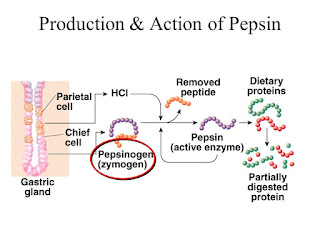

Comments
Post a Comment